Classical homeopathy means homeopathy with Principles "Classical" homoeopaths attempt to identify the single medicine that corresponds to a patient's general "constitution" a complex picture incorporating current illness (physical and mental), medical history, personality, behavior and family history.
We call it as Tailored medicine - Two patients with identical conventional diagnosis may receive very different homoeopathic medicines. As you know same strategy cannot be adopted to control the terrorism in all the victim countries, in the similar way Homeopathic medicines are based on the individual personality trait and behavioral reactions. Mental attitude, living style and environmental modalities indicate the specific medicine for a patient.

So there is no fix set of medicines for any ailment. It is well known that many homoeopathic medicines are ultramolecular that is, they are diluted to such a degree that not even a single molecule of the original solute is likely to be present. Because of its minuteness no one can feel its physical presence; it has only been felt by the sick person to whom it is being made or it is suitable to that particular person.
Few patients say that we are costly doctors but you should know that Homoeopaths' consultations for chronic conditions include an extremely detailed case history. Patients are asked to describe their medical history and current symptoms. Homoeopathic consultations in private practice may last over an hour.
Management:
A patient's initial symptom picture commonly matches more than one homoeopathic remedy, and follow up allows the practitioner to make an empirical judgment on whether a particular remedy was the correct one to prescribe. If the patient is doing well the practitioner may stop treatment and monitor progress. If symptoms recur the treatment may be repeated at the same or a higher potency. If the symptom picture has changed at follow up a different homoeopathic prescription may be given even though the conventional diagnosis remains unchanged.
Homoeopaths also treat a substantial number of patients with ill defined illnesses .. These are the functional disorders where homeopathy scores, very high. Some of my colleagues ask me how could I am doing so well? I say every homeopath can do the same work provided he follows the pure Hahnemannian (classical) homeopathy. unexpectedly I am able to manage the patients even in terminal stages and having too advanced pathological lesions even in lungs, liver, pancreas, kidneys, Eyes, uterus, ovaries, Psoriasis etc....
Any system of therapeutic (treatment method) can be judged on the basis of its basic criteria, such as...
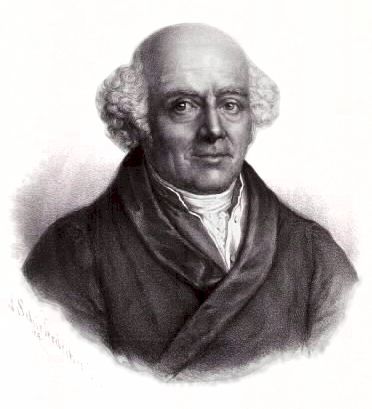
The Institute of Clinical Research in Mumbai was founded in 1975 by Dr. M.L. Dhawale Dhawale proposed the concept of “Standardization of Individualization” of homeopathic practice. It means standardization of the procedures that guide a homeopath in his clinical functioning. This is somewhat a paradox as homeopathic practice demands continual individualization of the patient, leading to each homeopath functioning in their own individualistic way.
What Differentiates the ICR way from other forms of Hahnemannian Homeopathy?
I Anion Cation Synthetic Prescribing In 1975 Dhawale expanded the concept of prescribing poorly proven mineral based medicines by combining well proven anions and cations. This was later taken up by Sankaran and Scholten.


II. Percieving Constitution : The constitution is a resultant of the assimilation of the environmental circumstance in response to the genetic plan, which thereby becomes programmed. The resulting constitution represents modified susceptibility and sensitivity from the original with which we begin life. We can observe the constitution through various attributes both mental and physical and how they change in response to the environment. These together give us a ready identification of the “constitutional type”, it is the position in which the organism is most stable; it manifests maximal resistance to all disturbing influences from the environment. This therefore, represents the State of Health, of Stable Equilibrium. By focusing on constitutional attributes in homeopathic remedy selection we are able to eliminate peripheral aspects in case analysis and synthesis allowing for clearer perception of the genius of the case.
III. MIASMS : A Phenomenological Understanding Of Disease. Throughout the homoeopathic literature there have been numerous explanations of the concept of miasm. Many of them are unfortunately are not followed by effective implementation at the bedside. The Miasmatic influence is a continuous spectrum with alterations that correspond to the change of phase denoted by appropriate changes in the activity index (Psora hyper, Sycotic :hypo, Tub hyper, Syph hypo and degeneration). By utilizing miasms in case analysis and treatment we are able to tackle states of Reaction Poor that would be otherwise more difficult to manage.
IV. Perceiving An Object : Structure, Form, Function, Over Time. The concept of totality is central to the practice of Hahnemannian homoeopathy. Appreciation of totality demands logical and analytical steps that can help to integrate and synthesize the data collected from the patient. Understanding Structure, Form and Function over Time an analytical tool which helps in the further integration and synthetic understanding of the totality of a given object, disease, Miasm or remedy.


V. Defining Bogers Approach : The ICR have been leaders in refining Boger’s Approach to homeopathic case analysis. This approach incorporates the following: Evolution of portrait of disease, Time dimension, Tissue affinity and Pathological generals.
VI. Standardization Of Individualization : Standardization of Individualization is necessary to reduce subjectivity of the homeopath, it allows us to evolve towards the ‘unprejudiced observer’ . The ICR place strong emphasis upon training the homeopath to Totality Consistently.
This requires : Sensitivity, empathy, capacity of resolution as well as discrimination. Idealistic bent of mind, strong determination, disciplined mind, and development of objectivity through phenomenological observation to minimize the influence of subjectivity and to protect the integrity of method.
The homeopathic method uses remedial doses based on symptoms which are considered signals to the source problem. Homeopathy is based on the principle that "like treats like". Like treating a hangover by drinking a small amount of alcohol, or “hair of the dog,” homeopathy uses tiny amounts of natural substances to cure the disorder.
Symptoms are essential for finding the curative homeopathic remedy. They are signals from your body indicating a cure is required from a particular stimulus. The stimulus triggers your natural defense mechanism/immunity (vital force) to do the healing.
For cure, symptoms need to be overcome by your body’s healing forces. The well-chosen homeopathic remedy triggers your body to do its own healing. Otherwise, if symptoms are suppressed, they tend to return in a form worse than previously experienced. For instance, many times eczema occurs after skin symptoms have been suppressed by topical treatment.
Once a health problem is overcome by using a homeopathic remedy, not only will the symptoms disappear, but your overall health will be at a higher level than before the illness.
Homeopathic remedies often are a highly diluted dose prepared in a special way to unfold their curative effects. This makes homeopathy one of the most gentle and most safe medicines there is.